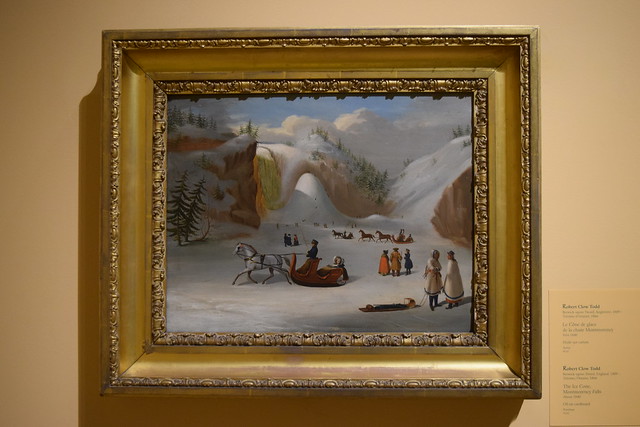
I was drawn to some areas more than others as I tend to prefer landscapes and documentary paintings like this painting of Montmorency Falls by Robert Clow Todd circa 1840.
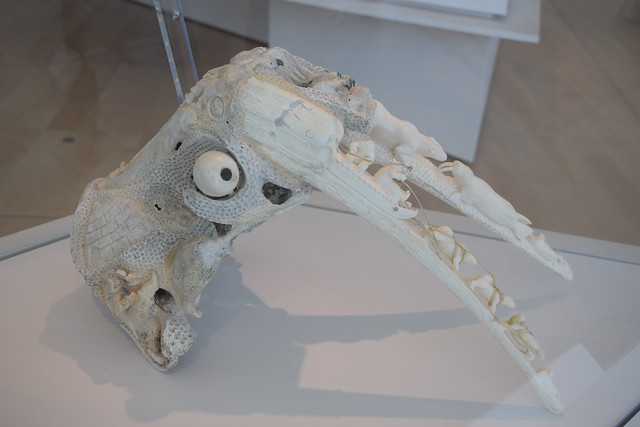
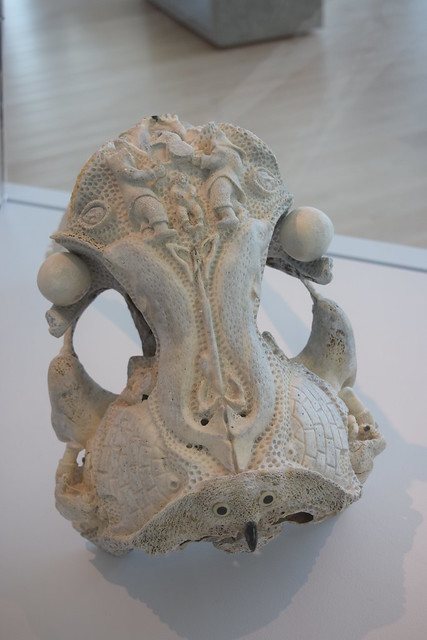
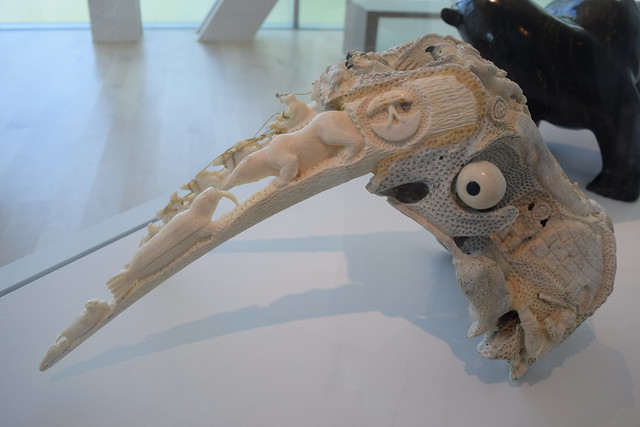
Much of the museum is dedicated to modern and contemporary art, but I found the Inuit Art even more fascinating - most made from carved stone, bone, tusks and horn. I was pleasantly surprised by these pieces. Here is one of the more elaborate objects made from a Walrus skull shown from three different angles. Amazing!
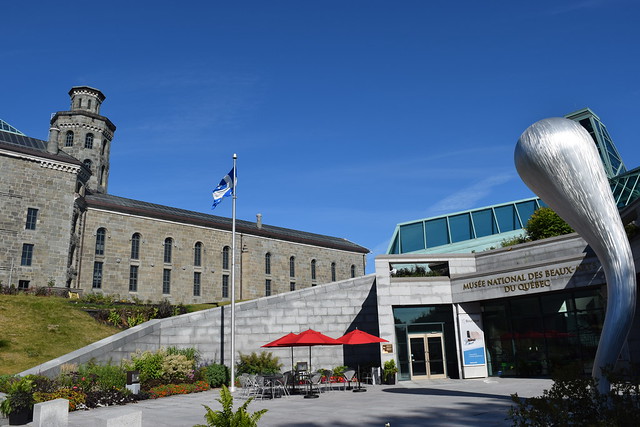
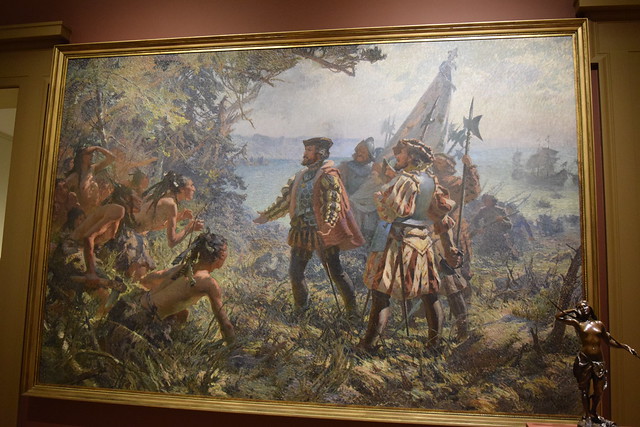
I had the pleasure of spending the better part of a day in this lovely place making discoveries and photographing some of my favorite pieces.
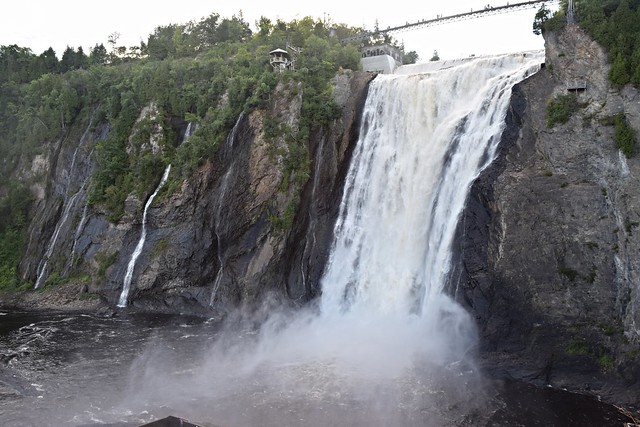
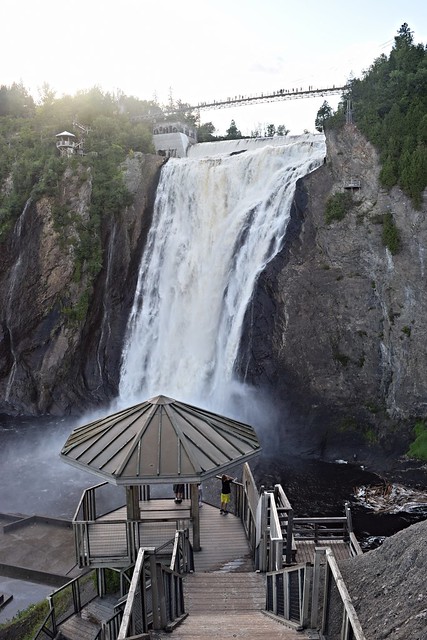
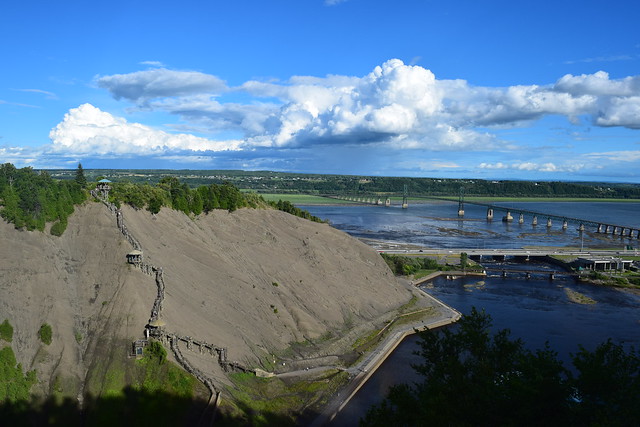
Montmorency Falls or Chute-Montemorency on the the north shore of the St. Lawrence River is a mere 15 or 20 minute drive from the old city of Quebec. There are stairs, bridges and overlooks (belvedere in French) all around the site allowing views of the falls from many vantage points. A lovely picnic spot with swings sits atop the falls on the eastern side and a small playground is situated on the west side of the bridge. Another playground lies at the bottom of falls near the visitor center. There are fees for vehicle parking whether at the top or the bottom. For a more unique and expensive perspective, one can view the falls from a sky-tram that transports riders from the visitor center below to a restaurant and trails at the top.
Montmorency Falls is a must see that provides a spectacular view of the city and the surrounding area. The natural beauty of the place is impressive in any season and it provides a great physical context for learning the history of Quebec City.
A belvedere along the elaborate stairs overlooking the falls
A view from the top of the St. Lawrence River Valley with the bridge to Ile de Orleans
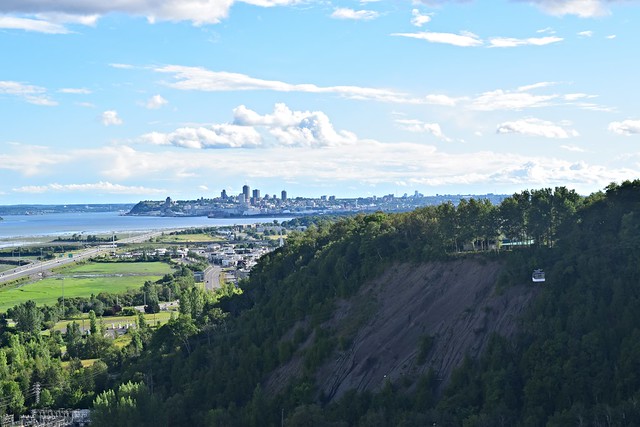
View of downtown Quebec City from Cartier-Brebeuf National Historic Site
The kids enjoy the spinning device while others the splashpad in the background
We visited the Cartier-Brebeuf National Historic Site during our stay in Quebec City. In addition to steles commemorating the history of the site, there is a splashpad and playground as well as walking and bike trails run through the site.
Here one can also find a Parks Canada interpretive center with displays of the Iroquois way of life along with information on Cartier and the first Jesuit mission in Quebec established near the site in 1625. The kids completed the Parks Canada Explorer Booklet for the site where Jacques Cartier is believed to have wintered on his second voyage up the St. Lawrence in 1535. At the time, a village called Stadacona existed in the area inhabited by the Iroquois.
Outdoor art representing one of the ships that Cartier left behind when he returned to France.
With their completed Explorer Program booklets
One astounding thing I learned from our visit was that the 16th century natives of the area had a remedy for scurvy that essentially cured Cartier's men of symptoms within 24 hours. Somehow that remedy, a tea brewed from elements of the "tree of life,"seems to have been altogether unknown 75 years later by Samuel de Champlain and the founding families of Quebec who continued to suffer from scurvy during numerous harsh winters. Even today, the exact species of tree used by the natives in their medicinal tea is not known for certain. The main ingredient could of been one of several native evergreen trees. Many believe it was a species of Eastern White Cedar as noted on a display inside the interpretive center. Outside, on another interpretive display, the species is listed as the Balsam Fir.
We are staying in an Airbnb, a row house two blocks away from the Museum of Modern Art in the Montcalm neighborhood of Quebec City. The area is picturesque this time of year with flowers filling window baskets, door stoops, and side yards of quaint historic buildings. All this and walking distance to some great attractions and parks. This morning I took a walk to the Saint-Jean-Baptiste church and neighborhood and took a few random photos along the way.
We thoroughly enjoyed the parade that preceded the 153rd Antigonish Highland Games, especially the pipe bands. During this parade and at the games themselves, we heard more bagpipe music than ever before and that includes our trip to Scotland. The bagpipes, the drums, the flair of the drum beaters combined with the kilted uniforms intrigue the senses and make for quite a show.
The timing of our stay in the North Shore region of Nova Scotia this summer afforded us the opportunity of attending the 153rd Antigonish Highland Games. I was elated to have the opportunity to attend the oldest, longest running Highland Games outside of Scotland. There is just something fascinating about seeing big burley guys in kilts throwing around stones and tree trunks. Oh, and surprise! There were women competitors as well - awesome!
Profession Maritime Scottish Heavy Weight competitors Joe Hall, Jeff Kaste, Ryan Stewart, Jason Baines, and Robert Meulenberg in the forground. USA competitors wore blue and Canadians wore red. Some female competitors are in the background.
Robert Meulenberg of Bangor, Maine throwing a 17lb Open Stone
The caber toss is a crowd favorite at the games. Here you can watch competitor Nathan Burchett's nearly perfect toss. The goal is to toss it end over end into the air and have it fall at exactly 12 o'clock from your throwing position - thus the need for the judge to follow behind the competitor.
There were many other heavy events performed by skilled participants - most, if not all, were from Canada and the United States. A Junior League was also present to compete. The hope is that they will one day be professionals able to continue the tradition and quality of the games.
The most unexpected competition was the Tug of War events. It seems each community has their own team of strong and scrappy individuals. Each event is 15 minutes long. The most exciting moment occurs when the entire team switches their grip and turns toward the anchor man for a concerted lunge to gain ground. Sometimes it works and sometimes it doesn't. Unfortunately, during the two 15 minute events I never quite caught that moment on video, but there were other exciting moments that were.
Pictou Tug-of-War team trying to regain ground lost to the Antigonish team
In addition to all of this, there were also musical competitions for bag pipers, pipe bands and their drummers as well as a highland dance competition all occurring simultaneously. Bagpipes and drums were heard throughout the day as bands practiced while soloists competed and vice versa and all this mingled with the music of the bagpiper playing for the dancers and the voice of the announcer for the heavy weight events. The best show was put on by the bands as they played for the judges. Note how the drummers twirl their bass beaters in the video of 78th Highlanders Halifax Citadel Pipe Band.
Highland dance competition at the 153rd Antigonish Highland Games
Our family enjoyed our day experiencing all the cultural sites that the Antigonish Highland Games had to offer which included a parade through downtown. Given that it was Highland Games weekend in Antigonish, we expected huge crowds and terrible traffic. We were astonished to find things very low-key, laid-back, and no huge crowds to speak of perhaps due in part to the cooler and somewhat damp weather. Whatever the cause, it helped to make our experience at the games a very positive one. I would certainly attend again should I get the chance.
Twice now we have gotten requests to use a photo of ours by another website or company. The first request was from Touristlink who ended up using one of our campground photos on their page.
Ironically, before leaving on our summer sabbatical to Canada, we were contacted again - this time by a Canadian news network, CBC. They were looking for images to use in a special interactive website for a very popular rock band in Canada called The Tragically Hip. This hugely popular Canadian band is in the middle of a tour despite the cancer diagnosis of lead singer, Gord Downie. Perhaps in preparation for it's August 20th broadcast of their hometown performance and as tribute to this iconic band, CBC put together an interactive online feature with lyrics and sound bites from several of Tragically Hip's songs.
In 2013, we took our travel trailer on the ferry from North Sydney, Nova Scotia to Newfoundland. The weather on the return voyage from Port aux Basques was foggy and more ominous as this picture shows. The song Dire Wolf by Tragically Hip was inspired by a rough ferry crossing and so CBC requested the use of this photo as a visual representative on it's interactive webpage.
I had heretofore never heard of The Tragically Hip, but I have since listened to some of their music. The poetic, story-telling is appealing, but it's unlikely that I will become a fan of their sound.
Today, we used a globe to geographically visualize our summer travels along the eastern coast of North America. We then selected a flag to draw from one of the three Canadian provinces that we have visited. Elisabeth chose the flag of Quebec with the Fleur de Lys in each corner, a stylized flower historically associated with all things French. Jonah intended to draw the Nova Scotian flag with the blue bars and a white background. He accidentally reversed the colors which is actually fitting considering the flag of Nova Scotia (New Scotland) is inspired by the Scottish Flag and the Cross of St. Andrew. I was left with the challenging New Brunswick flag with it's golden lion on a red background over an galley, which is essentially the same as their coat of arms. (I neglected to include the oars in my drawing.)