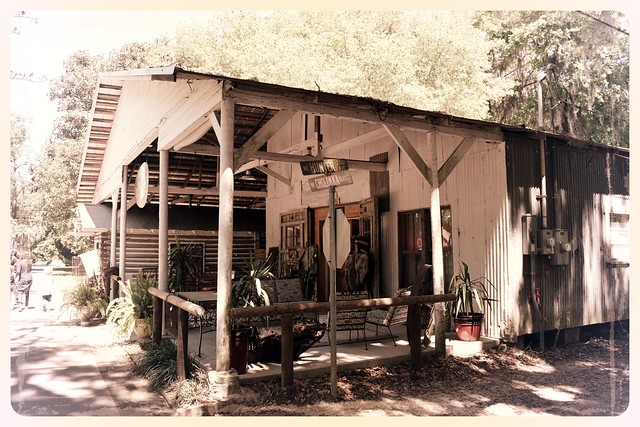
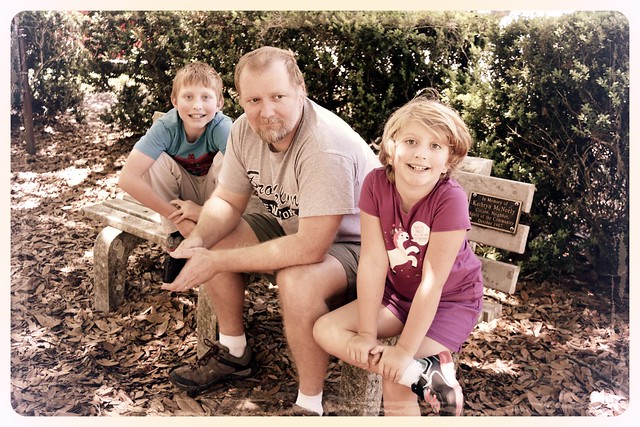
We learned some little known Revolutionary War history at this lovely national park. The visitor center is top notch and there is lots of hiking. Family and equestrian camping are available at Kings Mountain State Park a few miles down the road.
We are finally finishing up our history curriculum on the Middle Ages (The Story of the World: History for the Classical Child: The Middle Ages: (Vol. 2)). History is a subject I really enjoy, so I tend to add lots of supplementals. I was excited when we finally got to the Elizabethan Age and Shakespeare so that we could utilize all the wonderful resources out there on the subject.
In our curriculum, the story of Macbeth was used as the introduction to Shakespeare. I chose to also focus on Hamlet as we are fortunate to live in an area with a Shakespeare Theater where Hamlet was performed this last season. My 10 and 12 year old enjoyed the slightly abridged version of Hamlet at Orlando Shakes though they still thought it was long. (They were not wrong.)
In addition to these book materials, I found several videos that were entertaining and insightful for all of us. I have mentioned videos by Crash Course in the past for history topics, but they also have both a Literature and Theatre video series that include information about Shakespeare and his works. The literature video series has episodes that give an overview and literary importance of Hamlet, The Sonnets, and Romeo and Juliet. The theatre video series includes several episodes expressly about Shakespearean Theatre in a historical context. (Since every parent has different filters for their children, I suggest parents watch these first.)
TedEd has some great educational content in general as well as this little gem on Shakespeare's Macbeth:
As you learn about Shakespeare and his works, one can't help but discover the controversy surrounding the identity of the man himself. There is another TedEd talk on that subject called, "Did Shakespeare write his plays? - Natalya St. Clair and Aaron Williams" and a documentary that I personally found fascinating entitled "Last Will & Testament." (Last Will & Testament is currently available on Amazon Prime and I believe PBS Passport.)
I was already convinced of the importance of Shakespeare's works when at a recent homeschool convention I learned that the works of Shakespeare are considered Honorary Classics. There is The Iliad and The Odyssey by Homer, The Aeneid by Virgil, The Divine Comedy by Dante, The King James Bible and then the works of Shakespeare, considered by many to be the "Western Canon." I look forward to delving more into the works of Shakespeare in the coming months and years. Once again, I find myself learning along side my children and finding new interests and amazement in things that I would have never before imagined and I am grateful.
Using a printout template from our Story of the World curriculum, the kids made "stained-glass" Out of Shrinky Dink Paper. Once again, my art-loving daughter embraced the assignment whole-heartedly. This was a nice supplemental exercise for learning about the Protestant Reformation and Counter Reformation in our history curriculum.
Elisabeths clay reproduction of a Doric Column and drawing of an Ionic column.
While studying the Renaissance as part of our Story of the World history curriculum, we watched several videos on Greek and Roman columns including this one by Khan Academy on The Classical Orders.
After studying the different column types especially Doric, Ionic and Corinthian, we reviewed photos of places we have visited such as the British Museum and the National Portrait Gallery in London to practice identifying the different column types. When asked to draw or sculpt an example, Elisabeth fully embraced the idea (pictured above), while Jonah's sculpture of a column quickly morphed into a an unrelated, worm-like creature. He did, at least, enjoy the identification phase of our study. I was glad to find activities that allow both kids with their differing interests to engage with the curriculum. In this case, the art component added interest to the subject matter for Elisabeth, who generally speaking does not get quite as excited about learning history as Jonah does.
In August 2017, we visited the mountains of North Carolina to see friends, be closer to the path of totality for the eclipse and to get a break from the Florida heat.
When traveling, I am always on the lookout for unique learning experiences. The kids were very interested in gem mining so I researched a couple of places and decided on Emerald Village. It was a longer drive for us but I was intrigued by the history of the site as well as the gem mining opportunity.
The mines at Emerald Village were started during the depression as a source for feldspar as the main ingredient in the Bon Ami cleaning product. Ironically, any other items found including gemstones were tossed away as worthless tailings. Today, customers can pay for a pass to glean precious metals and stones from those tailing piles. I would imagine that you really need to know what to look for.
We toured the lovely grounds and museum for a fee and payed to sift through a medium sized bucket.
One of the mines with old equipment about.
Visitors can walk back in the shallow cave and feed the trout in the pond
The Bon Ami Museum and Mine tour entrance at Emerald Village
Inside the mine museum at Emerald Village
An old post office on site at Emerald Village
The Discovery Mill at Emerald Village
Antiques in the Discovery Mill building at Emerald Village are numerous and diverse
Inca Wall replica and Soapstone Llama from Peru (2003)
Learning about history when I was a kid was so disjointed and hard. It was all about memorizing random names of people, places and dates, or so it seemed to me at the time. Thanks to modern day resources like The Story of the World: History for the Classical Child, my children are learning a much more cohesive world history than I did and are quite entertained in the process.
We are currently working our way through Volume 2 of The Story of the World on The Middle Ages.
Most recently, we learned about early American peoples - the Maya, Aztecs and Inca in particular. The biggest reasons I love “teaching” history is all the additional resources that are out there both in book and video form. In this instance, I had the added joy of sharing photos and trinkets from a pre-motherhood trip to Macchu Picchu.
Here are some great history resources that I have found invaluable:
The kids and I started watching the Horrible Histories series a couple of years ago browsing through online streaming options. We have watched all of the episodes available to us and still go back to it just for fun (some of the music is really great!). I recently discovered a wiki page for the series where I can search specific subjects to find out what episodes contain relevant material. For instance, Episodes 1, 4, 5, 9 & 12 from Series 2 and 1, 6, 9, 10 & 12 from Series 3 all have references to the Inca and Aztecs, respectively. So we viewed those specific episodes as an accompaniment to our curriculum.
Kid's Animated History with Pipo: The Time Compass is another awesome history resource. My only problem with this series is that there aren't enough of them! Fortunately, they do have two part videos on The Maya, Aztecs and the Inca currently streaming on Amazon Prime.
Thanks to all these resources as well as some good quality books, I have found, as an adult, a love and appreciation for history that I never knew as a child. I thoroughly enjoy teaching history to my kids primarily because I am learning so much right along with them.
We are studying the Middle Ages and a recent focus was knights, castles and chivalry. The kids each made their own shield designs. Elisabeth chose a Christian symbol to pair with a design for our surname. Jonah made a design for my maiden name (purple) and to pair with our surname. I thought it was interesting that they chose similar color schemes.
View of downtown Quebec City from Cartier-Brebeuf National Historic Site
The kids enjoy the spinning device while others the splashpad in the background
We visited the Cartier-Brebeuf National Historic Site during our stay in Quebec City. In addition to steles commemorating the history of the site, there is a splashpad and playground as well as walking and bike trails run through the site.
Here one can also find a Parks Canada interpretive center with displays of the Iroquois way of life along with information on Cartier and the first Jesuit mission in Quebec established near the site in 1625. The kids completed the Parks Canada Explorer Booklet for the site where Jacques Cartier is believed to have wintered on his second voyage up the St. Lawrence in 1535. At the time, a village called Stadacona existed in the area inhabited by the Iroquois.
Outdoor art representing one of the ships that Cartier left behind when he returned to France.
With their completed Explorer Program booklets
One astounding thing I learned from our visit was that the 16th century natives of the area had a remedy for scurvy that essentially cured Cartier's men of symptoms within 24 hours. Somehow that remedy, a tea brewed from elements of the "tree of life,"seems to have been altogether unknown 75 years later by Samuel de Champlain and the founding families of Quebec who continued to suffer from scurvy during numerous harsh winters. Even today, the exact species of tree used by the natives in their medicinal tea is not known for certain. The main ingredient could of been one of several native evergreen trees. Many believe it was a species of Eastern White Cedar as noted on a display inside the interpretive center. Outside, on another interpretive display, the species is listed as the Balsam Fir.
After our stop at the Falkirk Wheel, we headed on to Stirling. By the time we had eaten a late lunch, the rain had let up and we decided to go ahead with a visit Stirling Castle. We only had a couple of hours before closing time, but since we'd already purchased a Scottish Heritage Pass it was still worth it. As it turns out, I enjoyed our tour of this castle more than the Edinburgh Castle. There were more nooks and crannies to explore devoid of people. The weather earlier in the day kept the tourists away, so, for the most part, it felt as if we had the place to ourselves. In addition, there was a great kid-friendly area in the lower recesses of one of the buildings with age appropriate exhibits and a dress-up area.
Like so many of the Scottish castles, Stirling Castle was built atop a rock promontory that dominates the surrounding area. The views from the castle are superb. We could easily see the William Wallace Monument (most Americans are familiar with him as the main character in Braveheart) and the spot on the river where he lead Scottish soldiers to victory over the British at Stirling Bridge.
After leaving the castle, we stopped for a brief walk around the Bannockburn battlefield and a statue of Robert the Bruce astride his armored steed. We ended our day in Stirling at Broomhall Castle: our first and only stay in a bed and breakfast during the entire trip. The beds were nice but the breakfast was hearty and delicious; I didn't know a traditional Scottish breakfast included mushrooms. Yum! We left there tanked up and ready for another day of driving and sightseeing.
Location of Hadrian's Wall and the Antonine Wall in Scotland and Northern England. (Photo credit: Wikipedia)
A year ago today we were bundled up and occasionally getting pelted with sleet as we visited our first British Castle in Carlisle, Cumbria. We were introduced to the story of St. George and the dragon when our then 8 year old was able to participate in a reenactment of the story. This was also the first place we saw obvious indications of Roman occupation of this area. Stones from earlier Roman structures, including those inscribed with Latin, were used in the construction of Carlisle Castle.
However, it was on the following day that we really got a taste of the Romano-British era as we followed Hadrian's Wall on what was once a Roman road. We stopped at several major forts like Housesteads as well as smaller roadside mileforts along the route.
These couple of days were some of the most amazing and memorable. Of all the places we visited, this northernmost area of England is right up there with London in priority for a return visit. I would love to explore this area on foot one day.
On this day last year, we were on our way to Great Britain for the vacation of a lifetime. During those first few days, we visited historical sites the likes of which I had never before seen: Avebury, Stonehenge, and Old Sarum among them. We wore ourselves out trying to see and do as much as we could during our two weeks in-country. Our pace was exhausting, but it was so amazing! I will be taking time to reminisce over the next couple of weeks and sharing photos and videos that I just didn't get a chance to share last year.
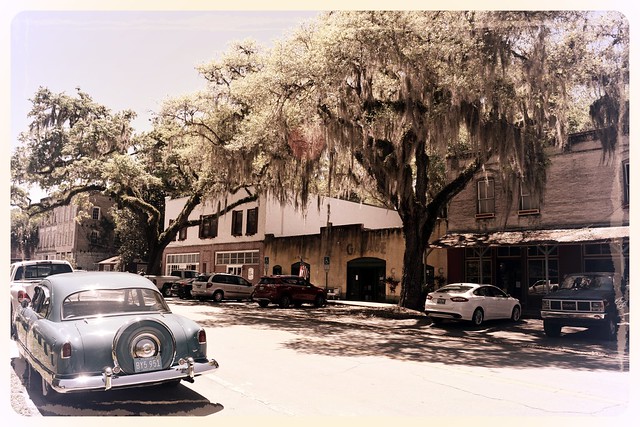
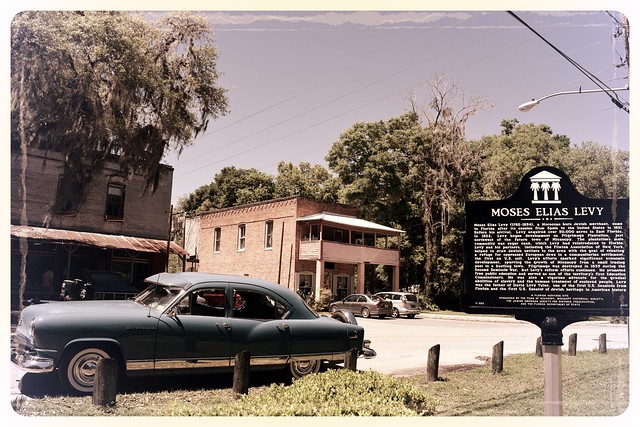
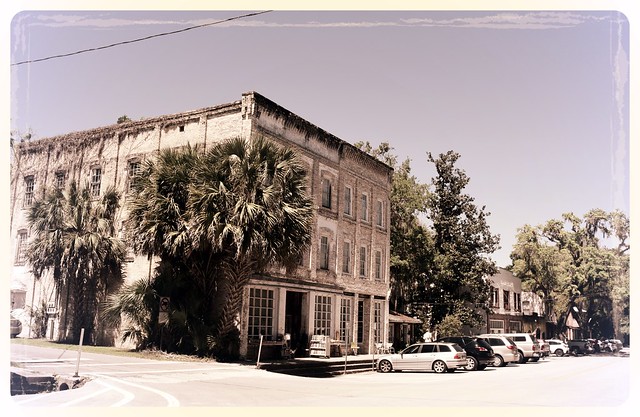
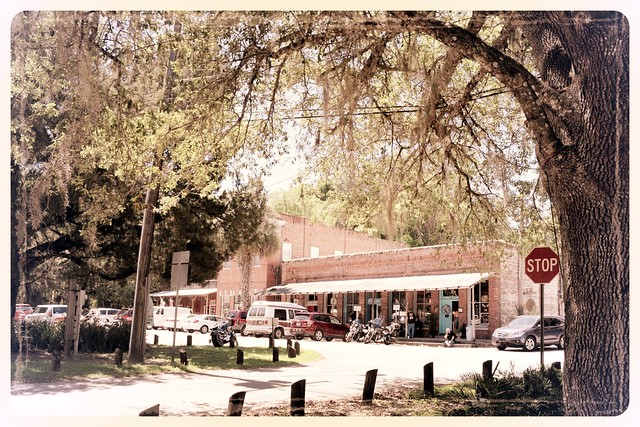
The rustic sign for Historic Micanopy (mick-a-no-pee) is directly off the I-75 exit on the way to Paynes Prairie Preserve State Park. Our curiosity peaked, we decided to check it out and happened upon the quaintest little example of "old Florida" that I've ever seen. We skipped the Micanopy History Museum during this visit but learned a bit from the historic markers located around town. This area was used primarily to free range cattle by several subsequent tribes of Native Americans, from Timicuan to Seminole. In fact, the Cholokka Blvd, which is the main street of Micanopy, was once an Indian Trade route and is on the National Register of Historic Places. Today, the main street is lined with grand oak trees and old store fronts which house antique shops, cafes and art studios. It was a lovely spot for a stroll and a scoop of ice cream.
The last stop on our tour of Hadrian's Wall was the remains of Corbridge: A Roman Town. Corbridge is significant for several reasons - the most obvious being the easily discernible stratification of several eras of Roman construction.
During the Roman occupation of the the British Isles, forts were constructed to secure areas of conquest. However, there was a secondary benefit. Roman soldiers meant opportunities for trade. So villages would spring up outside the forts. This process was a convenient way to Romanize (or civilize) the occupied area. Corbridge became one of two successful Roman towns in the area around Hadrian's Wall (the other being Carlisle). While Corbridge was growing and inhabited right up to the end of the Roman occupation, there was very little development thereafter in contrast to Carlisle. The Roman remains there are buried beneath a castle and modern town. But Corbridge is surrounding by rural lands lending itself to much more extensive excavations. Therefore, the remains of at least four forts built one on top of the other are apparent followed by a large legionary supply base and a full-blown town. Subsidence of the upper layers shows is the first clue that the town was built on top of previous forts.
The undulation of the ground in the center reveals settling due to the underlying Roman construction
I believe this was a granary - ventilation kept out the wet and pests
Subterranean drainage system
Storage Room
The museum at Corbridge houses a variety of items uncovered in the area including Roman armor and other items found as part of the Corbridge Hoard and the Corbridge Lion which is believed to be a gravestone.


 . Once again, my art-loving daughter embraced the assignment whole-heartedly. This was a nice supplemental exercise for learning about the Protestant Reformation and Counter Reformation in our history curriculum.


 Learning about history when I was a kid was so disjointed and hard. It was all about memorizing random names of people, places and dates, or so it seemed to me at the time. Thanks to modern day resources like The Story of the World: History for the Classical Child, my children are learning a much more cohesive world history than I did and are quite entertained in the process.


 After our stop at the Falkirk Wheel, we headed on to Stirling. By the time we had eaten a late lunch, the rain had let up and we decided to go ahead with a visit Stirling Castle. We only had a couple of hours before closing time, but since we'd already purchased a Scottish Heritage Pass it was still worth it. As it turns out, I enjoyed our tour of this castle more than the Edinburgh Castle. There were more nooks and crannies to explore devoid of people. The weather earlier in the day kept the tourists away, so, for the most part, it felt as if we had the place to ourselves. In addition, there was a great kid-friendly area in the lower recesses of one of the buildings with age appropriate exhibits and a dress-up area.