Showing posts with label Florida State Parks. Show all posts

Monday, January 02, 2017

Ponce De Leon Springs State Park

On our recent camping trip to Falling Waters State Park, we decided it was warm enough to take a swim. It may have been only a few days after Christmas and technically winter, but we were still in Florida where winter has to battle it's way even into the northern reaches of the state.  For our swim, we preferred the clear, inviting waters of  Ponce De Leon Springs State Park about 25 minutes away over the small lake at our campground.
This is a small day use park great for a picnic and a swim and is not to be mistaken with the much larger De Leon Springs State Park in central Florida. Both state parks are named after the towns in which they are located. I did not previously realize that Florida had two towns - Ponce De Leon Springs and De Leon Springs - so similarly named.

Friday, December 30, 2016

Falling Waters State Park

A couple of days after Christmas we headed to the panhandle of Florida to get away, see some sights and attempt to find old man winter. I made reservations 2 months ago at the only state park I could find with a site available for multiple consecutive nights - Falling Waters State Park in Chipley, Florida a six hour drive away. We haven't camped in the panhandle area and figured this was as good a time as any for a longer excursion.
Falling Waters State Park is a compact gem of a park centered around the highest waterfall in the state. Florida is commonly considered an oddity among the 48 contiguous states - it quite literally sticks out. Consistent with this oddness, Florida'a highest waterfall doesn't drop into a river or stream but a sinkhole and not just any sinkhole but a 73 foot circular pit and then disappears underground.
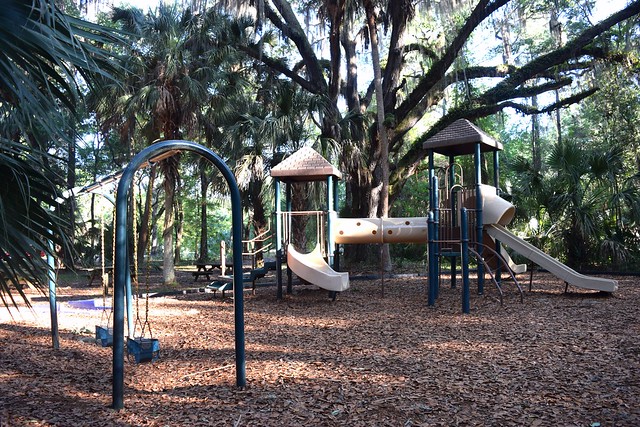
While not large, Falling Waters State Park is a quality destination perfectly adequate for an enjoyable  family camping experience. The park is fire managed with a good portion restored to a longleaf pine savannah. The campground feels a bit small with only 24 sites, but it is well cared for and the bathhouse feels new. There is a small lake in the park that helps give a consistent water supply to the water fall while also providing a swimming and fishing area. There are a couple of trails and boardwalks near the main attraction and the requisite picnic shelters and playground makes this a superb day-use area as well.


Monday, April 11, 2016

Paynes Prairie Preserve State Park

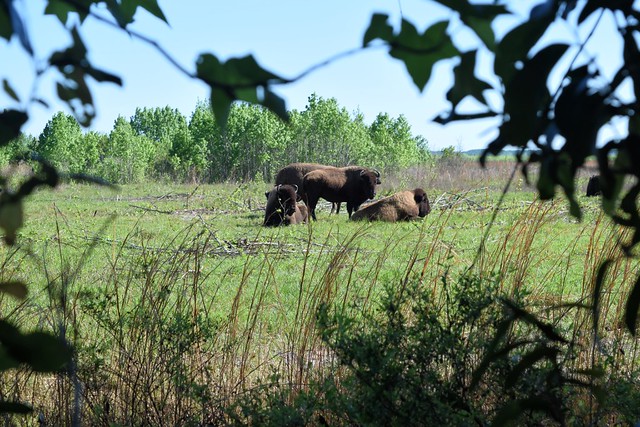
DSC_3076
American Bison at Paynes Prairie Preserve State Park
Established in 1974, Paynes Prairie Preserve State Park was Florida's first state preserve. Paynes Prairie encompasses more than 20,000 acres of savannah near Micanopy, Florida, a few miles south of Gainesville on I-75. We recently spent a lovely weekend RV camping in the park and using it as a base to explore the area including Historic Micanopy and the Florida Museum of Natural History.

There are numerous trails in the park for hiking, biking and horseback riding. We did a little biking along the south side of the prairie as well as a section of the Gainesville - Hawthorne Trail that traverses the north side of the park. During our visit, the herd of American Bison made an appearance near the observation tower and we were able spot wild horses through the binoculars. Paynes Prairie has a lot of unique features that make it worth a visit. Add in the park's proximity to I-75 and Gainesville and you have a fun yet relaxing get away.
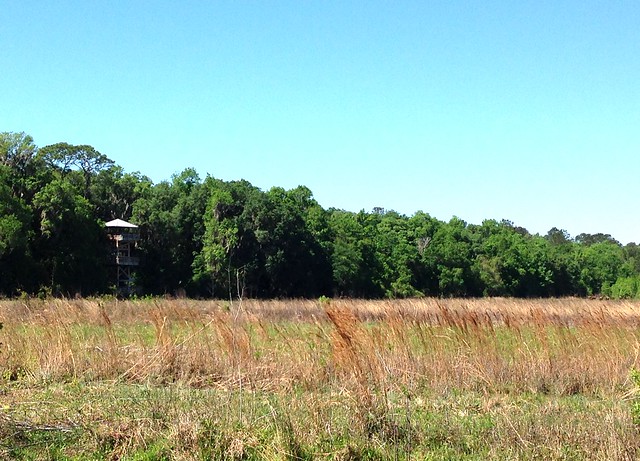
IMG_5803
50 ft. high observation tower overlooking Paynes Prairie
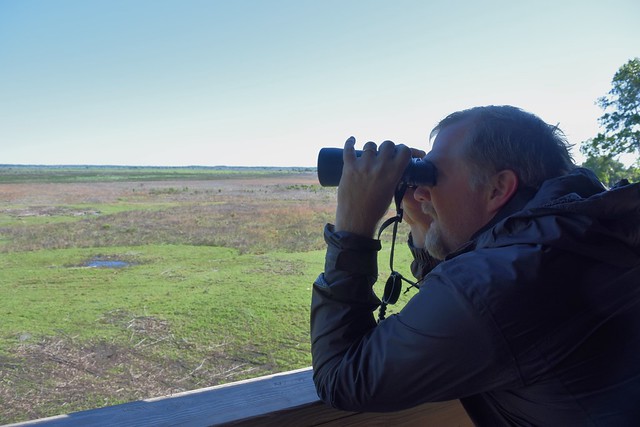
DSC_3070
Viewing Paynes Prairie from the Observation Tower
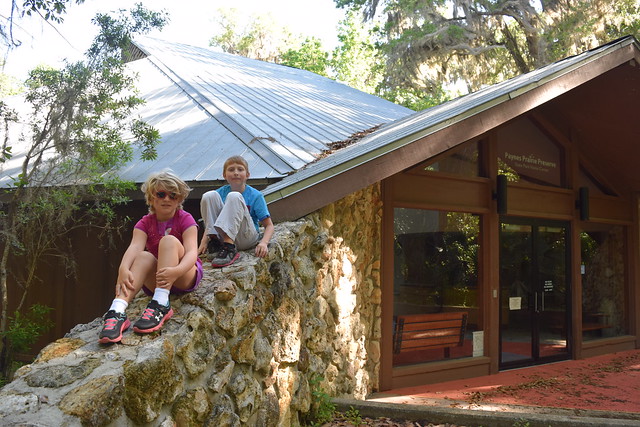
DSC_3062
The award winning visitor center at Paynes Prairie Preserve State Park (newly renovated, but still closed here)
IMG_5817
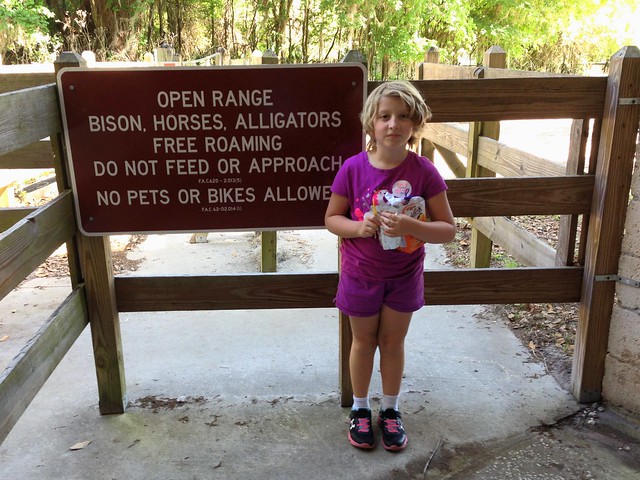
The warning signs upon entering La Chua Trail
DSC_3059
Playground at Paynes Prairie
DSC_3057
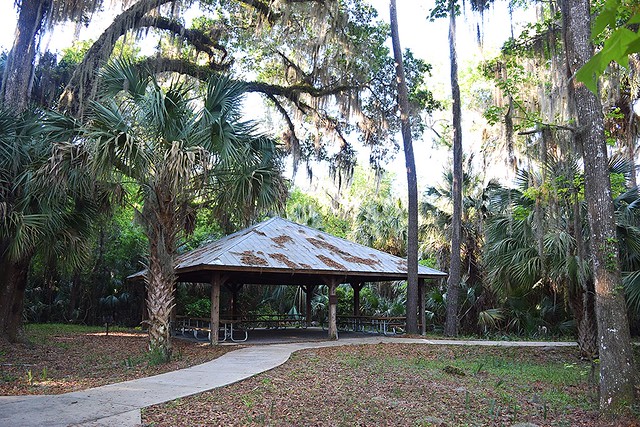
Picnic Shelter at Paynes Prairie
DSC_3056
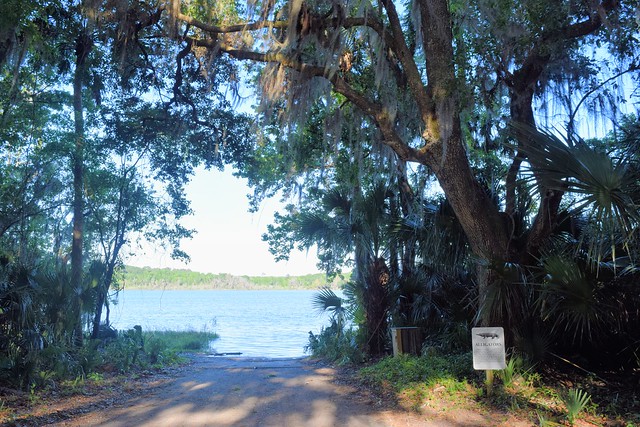
Paynes Prairie boat ramp to Lake Wauburg
DSC_3053
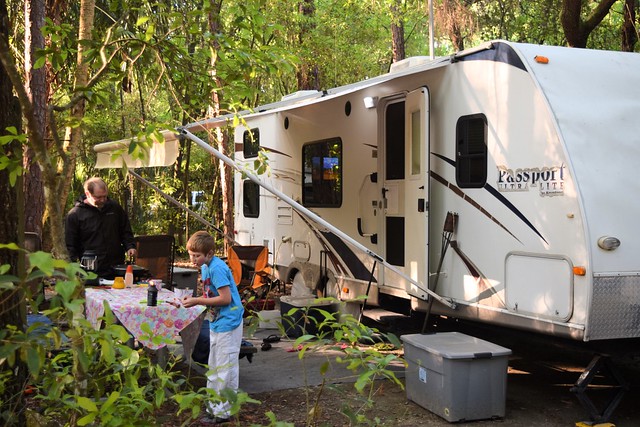
Campsite #9 at Paynes Prairie Preserve State Park

Wednesday, April 15, 2015

Kissimmee Prairie Preserve State Park: Where the Wild Things Are

We recently camped at Kissimmee Prairie Preserve State Park in south central Florida. This is probably the most remote state park in the Florida State Park System. It is known for having one of the darkest night skies in Florida as well as harboring the largest remaining stretch of Florida dry prairie within it's 54,000 acres.
It's another 6 miles to the campground from the main gate
Often, I like to write a review of places we visit. But here I will instead, attempt to share an experience during our stay that exemplifies the uniqueness of this park.

To set the stage, take a look at the picture below. It was taken at the edge of the campground. Note the flat mostly treeless expanse and the deer quietly grazing amongst the shrubs. Now imagine sitting on top of the picnic table in the foreground. The sun has set behind you and the starry sky begins to shine forth.
As dusk descends, your eyes are attuned to the heavens. Knowing this is a stargazers paradise, you stare at the sky in expectation. You note the position of the stars - the Big Dipper to your left and the Hunter at your back. Jupiter and Venus shine forth above you. The darkness deepens and you are surprised to find your eyes drawn, not up, but down to the earth. The prairie has come alive with lights of its own. You grab the binoculars for closer inspection; thousands - nay - tens of thousands of fireflies flit here and there in their chaotic celebration of the night. Beautiful. Unexpected. This magical scene is transformed when a red moon peaks out on the horizon to commence it's sacred march across the heavens. As the minutes pass, the prairie is peaceful as it basks in the brightening glow of a full moon. The hypnotic sound of insects begins to lull you - slumber calls you, you whose life is ruled by the light of day. Suddenly, another sound carries across the prairie. Wild and eerie. The howling of coyote - high pitched yelps of pups meld with the solemn call of their guardians. Then all grows quiet again. Realization sinks in. The signs of life seen in the day - those tracks in the mud: turkey, raccoon, deer, hog and "dog" - indicate an exciting night life. Somewhere out there, in the darkness is movement, activity - life governed by the night. The moon has climbed higher in the sky keeping it's own time like the round face of a clock. Once again, coyote call out as if their voices toll the hour. This night life goes on... until dawn.

Prairie life. It is not easy to see in the light of day, but at night the mystical sights and wild sounds leave no doubt - the prairie is alive and wild things thrive there.

Thursday, August 07, 2014

Faver-Dykes State Park and St. Augustine

Site #16 at Faver-Dykes State Park
Last week, we camped at Faver-Dykes State Park. We arrived at the park late Friday after several hours of heavy storms. The roadways within the park are not paved and we questioned our sanity pulling our 33ft travel trailer along these very wet dirt roads. Fortunately, they were well maintained so we made it to our campsite without issue.

There was just enough daylight left for backing in and unhooking, the process was made more frustrating than necessary by the incessant mosquitos. With trees dripping moisture and mosquitos buzzing all around us, we could easily imagine ourselves in a rainforest in another country. After getting all set up, outside areas included, we took refuge inside from the bugs and humidity.


The next morning, we left first thing to head to St. Augustine; we had no desire to hang around at camp. We stopped for breakfast and then went to the Castillo de San Marcos. It's the oldest masonry fort in the United States. The longevity of the fort is due in part to the construction material, coquina. Coquina is a type of limestone and this particular type of coquina is made primarily of small clam shells. This material is very porous and allowed the fort to essential absorb enemy cannonballs instead of shattering under the impact.


Coquina walls of Castillo de San Marcos
We have visited several other forts in our travels (most never made it on the blog) so it was nice to include this icon on our list.

Two hot kiddos in front of the fort
We strolled along the water to the marina where we grabbed some lunch at the Santa Maria Restaurant - my husband remembered eating there as a child with his family and feeding the fish through the little trap doors. It was in need of some updating, but it's easy to see how it's become one of St. Augustine's landmarks. The kids were overjoyed at feeding the fish and having their own favorite food to eat. Much gratified by her chicken nuggets and fries, my 6-year old daughter pronounced the day as the best ever and it wasn't over yet.

While at the marina, we also got a closer look at some of the more novel boats. One was a replica pirate ship called the Black Raven. It's essentially an ocean going stage for a pirate show. We took note of rates and times for a future special occasion - the kids were very interested and would likely really enjoy it.
The Black Raven Pirate Ship
The Black Raven should feel right at home in the oldest port in America. Pirates, after all, were no strangers to St. Augustine. The "Old City" has a long sordid history that includes being burned twice by pirates, once by Sir Francis Drake who the Spanish called "The Dragon." We learned a lot about pirates at St. Augustine's Pirate and Treasure Museum. It was a great way to end our day. This museum is unique in that it houses one of the largest hordes of authentic pirate related artifacts anywhere. From a parent's perspective this museum gets two thumbs up, because they manage to entertain the kids long enough for parents to actually have time to take in the displays for themselves. While the kids were working on their treasure hunt, I got to read about Sir Francis Drake and note that the Jolly Roger hanging behind the glass was one of only two authentic flags of the sort known to exist.

We had a lovely day in town (despite the heat) and decided to head back to camp for dinner. It turned out to be a very pleasant evening once we got all the citronella candles and Tiki torches lit. We took a little hike on the nature trail as well and sighted an armadillo scrounging for his dinner - if you are quiet they will walk right up to you as you can see in the video. For a minute there, I thought he was going to crawl over my feet.

The next day we tried a little fishing in the brackish waters of Pellicer Creek before heading home.
Fishing dock on Pellicer Creek at Faver-Dykes SP
Boat launch on Pellicer Creek at Faver-Dykes SP
If you want to get away from civilization and experience a very natural Florida, this park is a great place to visit. In the future, we will only consider camping here in cooler months.

Related Posts:

Saturday, June 28, 2014

Sebastian Inlet State Park

The South Beach at Sebastian Inlet State Park
Last weekend, we had our first camping trip since being back in a house. We chose Sebastian Inlet State Park for the beach and fishing opportunities and it was the only state park with beach access with Friday AND Saturday night availability. Since it was the last spot available (#17) for the weekend, it was probably a less desirable one due to being crunched between two other sites without much privacy. The proximity to the inlet was superb however. Once the kids were asleep, we were able to use our phones like baby monitors and go do a little night fishing.
Site #17 at Sebastian Inlet State Park
One thing I didn't really remember about this area is how close the reefs are to the shore. It didn't take long for me to rediscover this however, and I got my dive mask on for exploring. The timing of the tides was perfect. We got out on the beach in the morning on Saturday and Sunday right at low tide when the water was the calmest and clearest. The first day I found some tackle on the bottom and a bottle of nail polish. I know it sounds silly, but I was delighted with even these small treasures. And, given that I lost a big fishing weight in the inlet the last time we visited, I felt quite compensated.

Large Lightning Whelk shell
Sunday, we broke camp early so we could just enjoy our day at the beach without concern for the 1 o'clock check out time. We were set on doing more snorkeling having gotten better masks the day before. On Saturday, I spotted some smaller bait fish and sheepshead, but Sunday we saw those plus a number of snook and a school of lookdowns. My treasure find on Sunday was a huge whelk shell tucked in between two rocky outcroppings. The kids keep calling it a conch shell, but I'm pretty sure it's from a big Lightning Whelk. And Kelly found a big, shiny, shark hook that he is hankering to use.

I was delighted to see many different animals over the weekend and not just fish. We weren't the only mammals enjoying a day at the beach; both days we saw manatee and dolphin. I remembered from my college days as a member of the UCF Marine Turtle Research Group that juvenile sea turtles use this area as feeding grounds. We saw a turtle head pop up here and there on Saturday, but Sunday they seemed to be everywhere - little green turtles bobbing to the surface for air sometimes waving their little flippers - so cute!

Both kids got a taste of snorkeling, without the snorkel. They both swam with us in deeper water as we perused the reef areas. They enjoyed the ocean like never before. Even at high tide the waves kept to a gentle roll. They hardly got out of the water at all on Sunday.

Needless to say, we all had a great time. At the moment, this is my favorite weekend spot in Florida and less than 2 hours away from home. I look forward to a return trip.